What is laser therapy?
April 2026
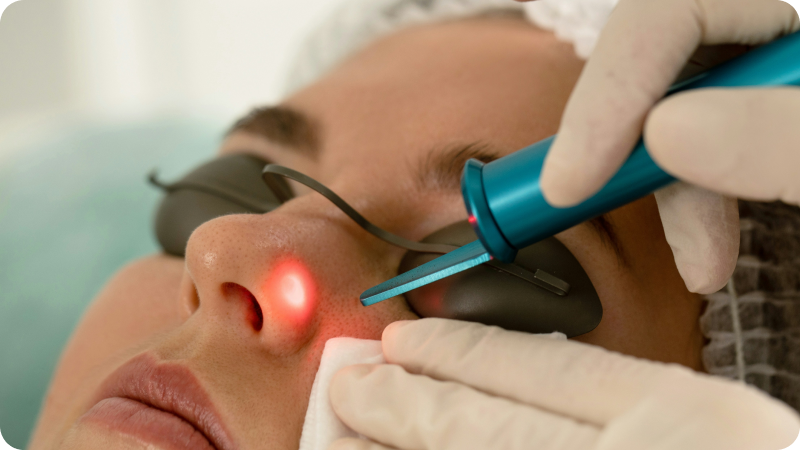
Due to its precision, laser therapy has become an important part of modern aesthetic medicine. Rather than approaching the skin in a broad, generalized way, laser and light-based treatments can be selected to address specific concerns with a high degree of control. Concerns could include redness, uneven tone, visible vessels, textural irregularities, fine lines, or signs of sun damage. Laser therapy can offer an effective, refined option for patients looking for non-surgical or minimally invasive solutions.
At the same time, the term itself can be misleading. “Laser therapy” is not a single treatment, but a category of technologies designed to interact with the skin in different ways. The various types of laser treatments make that level of precision possible.
How laser therapy works
Laser therapy works by delivering concentrated light energy into the skin. That energy is directed toward a specific target, depending on the device and treatment goal. In some cases, the target is pigment. In others, it may be blood vessels, water in the skin, or deeper layers involved in renewal and repair.
Once that energy is absorbed, it creates a controlled response in the tissue. That response may reduce discoloration, diminish vascular redness, refine texture, or stimulate regenerative processes that improve the overall quality of the skin. Some treatments are more corrective, while others are designed to support gradual rejuvenation. This range is part of what makes light therapy skin treatments and laser-based approaches so versatile.
This is one of the reasons laser therapy remains such a valuable tool in aesthetic medicine. It is not simply about doing more. It is about treating the right concern with greater specificity.
What laser therapy can address
Laser and light-based treatments are often used for concerns that are difficult to improve with topical skin care alone. Persistent redness, visible capillaries, uneven pigmentation, rough texture and early signs of aging are all common reasons someone may consider laser therapy. Some devices are also used to support skin resurfacing, which can improve the appearance of fine lines and textural changes linked to sun exposure or collagen loss.
The appeal is often not only the result, but the method. For many patients, laser therapy offers a category of non-invasive treatments that can create visible improvement while maintaining a natural look. It can also be integrated into a broader treatment or utilized as a standalone fix.
However, the broader perspective is important. Skin concerns rarely exist in isolation. Texture, tone, inflammation, stress and aging all intersect, which is why a personalized treatment plan is usually more effective than a whack-a-mole approach. If you are considering laser treatments, it is important to work with a provider who begins by listening to you, your concerns and your goals, then uses that understanding to create a plan tailored to your skin, your goals and your needs. The American Academy of Dermatology also emphasizes that the right laser or light treatment should be tailored to the patient’s skin and concern profile.
Laser therapy and light-based treatments are not always the same
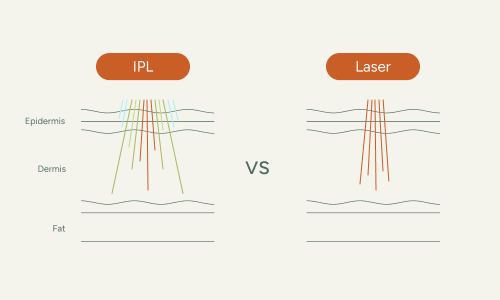
Patients often hear laser therapy discussed alongside IPL and other light-based treatments and the terms are sometimes used interchangeably. In practice, however, there are important differences. Lasers emit light at a single wavelength, while IPL uses a broader spectrum. Both can be effective, but they are not identical and they are not necessarily suited to the same concerns. You can also see that distinction reflected in how Cleveland Clinic explains laser procedures and how the American Society for Dermatologic Surgery describes IPL.
This is why treatment selection should always be made in consultation with your care provider, with an eye toward which technology is most appropriate for the skin concern being evaluated. Skin tone, sensitivity, medical history, desired downtime and treatment goals all play a role. The AAD notes that while lasers can be used on all skin types, darker skin can carry a higher risk of burns or pigment changes if the treatment is not selected appropriately.
A more precise approach tends to produce better outcomes and a better patient experience. It also reflects a more elevated standard of care. One that prioritizes fit, not formula.
Who laser therapy may be right for
Laser therapy can be a great option for patients who want to improve specific visible skin concerns with a treatment plan that feels targeted and medically informed. It is also often well-suited for those seeking noticeable yet natural-looking results and who value a tailored — rather than standardized — process.
Not every device is right for every patient and not every skin concern is best treated with a laser. In some cases, another modality may be more appropriate. Alternatively, laser therapy may work best in conjunction with an approach that includes skincare, microneedling or injectables. A thoughtful consultation can help clarify when and how to best implement treatments.
That individualized planning is especially important in a clinic like ours, where the goal is not to sell a category of treatment, but to understand the person in front of it. When laser therapy is considered and informed, it can be an elegant and highly effective part of care.
Why precision matters
In a crowded aesthetic landscape, precision has become one of the clearest markers of quality. That’s because patients are no longer simply looking for access to technology. They’re looking for treatments that are selected with rigor, delivered with intention and aligned with how they want to look and feel over time.
At its best, laser therapy supports exactly that. It offers a focused way to treat visible concerns while still respecting the individuality of the skin and the larger context of the patient’s body and medical history. A holistic approach is ultimately what makes the most meaningful impact and often where the real laser skin benefits emerge over time.
If you’re interested in exploring whether laser therapy would be a good option for you, reach out and schedule a consultation with one of our aesthetic clinicians today.
If you are interested in exploring whether laser therapy may be a good option for you, schedule a consultation with one of our aesthetic clinicians.
Frequently asked questions
Laser therapy for skin refers to a category of treatments that use concentrated light energy to target specific concerns such as discoloration, redness, texture changes, sun damage or signs of aging. Different devices work in different ways, which is why laser therapy is not a single treatment but a broader treatment category.
Laser therapy can be used for concerns such as pigmentation, visible blood vessels, redness, rough texture, fine lines, scars and sun-damaged skin. The exact use depends on the device and the clinical goal.
No. Laser therapy and IPL are related but not identical. Lasers use focused light at specific wavelengths, while IPL uses a broader spectrum of light. Both may be helpful, but they are selected differently depending on the skin concern, skin type and treatment goals.
Many laser and light-based treatments are non-surgical or minimally invasive. The level of downtime varies depending on the device, treatment intensity and the concern being treated.
Laser therapy may be a good fit for patients who want targeted improvement in specific visible skin concerns and who are looking for a medically informed, personalized treatment plan. A consultation is important because not every laser is appropriate for every skin tone, concern or medical history.
Provider selection matters because treatment choice should be based on the concern being treated, the patient’s skin type, sensitivity, medical history and downtime preferences. A more tailored approach usually leads to better outcomes and a safer experience.
Clinical references
American Society for Dermatologic Surgery. Laser/Light Therapy.
Cleveland Clinic. Laser Procedures.
American Academy of Dermatology. Lasers and Lights: How Well Do They Treat Rosacea?
Featured Articles

What does a functional medicine doctor do?
A functional medicine doctor is a clinician who takes a broader, systems-based view of health.

Collagen stimulation treatments
Collagen stimulation treatments have become increasingly central to aesthetic medicine because they reflect a more sophisticated understanding of skin aging.

What is integrative health?
Integrative health is a model of care that combines conventional medicine with evidence-informed therapies and complementary approaches in a coordinated, patient-centered care model.