What does a functional medicine doctor do?
May 2026

A functional medicine doctor is a clinician who takes a broader, systems-based view of health. Much of what makes such a doctor different revolves around how they work to move beyond merely treating symptoms to consider aspects of a person’s life, history and physiology that may be interacting to shape how they feel. Functional medicine is built around context, patterns and personalization.
Functional medicine doctors are not looking to replace primary care physicians, but rather take a different angle at understanding what may be contributing to persistent symptoms, subtle imbalances or one’s general sense that their health could be functioning better.
What functional medicine means
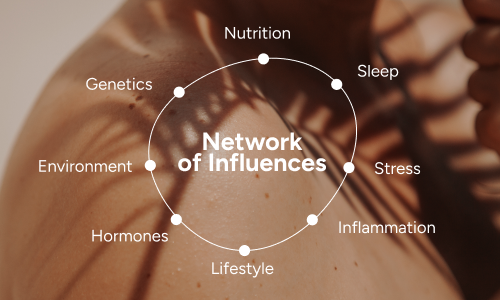
Functional medicine is often described as root cause medicine or care, though that phrase can gloss over some of the nuance. Most symptoms do not come from a single hidden source. More often, they emerge from a network of influences: nutrition, sleep, stress, inflammation, hormones, environment, genetics and lifestyle patterns that interact over time.
A functional medicine doctor is trained to look at those relationships as a whole. The goal is not simply to identify what ailment a symptom might suggest, but to explore why it may be happening and what systems might be involved. That might include reviewing a patient’s health history in detail, assessing their nutrition habits, examining patterns across multiple concerns and building a care plan that addresses both immediate needs and longer-term drivers.
This way of thinking treats the body as an interconnected — rather than compartmentalized — system. What it does not do is reduce a patient to a symptom list.
How functional medicine differs from conventional care
Functional medicine and conventional medicine are not opposites. In many cases, they work best in tandem. Conventional medicine remains essential for acute care, diagnostics, medication management and evidence-based treatment of disease. Functional medicine becomes especially valuable when the goal is to take a wider view of chronic symptoms, preventive care and the daily factors that influence long-term health.
That distinction matters. Functional medicine is generally positioned as complementary to standard medical care, not a replacement for it. It broadens the lens rather than rejecting conventional treatment models. You can see that distinction reflected in how Cleveland Clinic describes functional medicine and how NCCIH defines integrative health.
A functional medicine doctor may spend more time exploring the full picture, looking at factors such as sleep quality, nutrition, digestion, energy, stress physiology, hormone patterns, recovery and behavior patterns that affect health but do not always fit neatly into a brief appointment. The difference is often not one of legitimacy, but of scope. Functional medicine expands the conversation through a more integrative approach to understanding health.
What concerns functional medicine often addresses
Patients often seek functional medicine when they’re dealing with symptoms that feel ongoing, layered or insufficiently explained. Fatigue, brain fog, digestive issues, inflammation, sleep disruption, hormone imbalance and metabolic concerns are all common entry points. Sometimes these symptoms exist alongside a formal diagnosis. In other cases, someone simply knows they do not feel like themselves.
What functional medicine offers in those moments is not a promise of simple answers, but a more comprehensive process. It asks more and deeper-probing questions. It looks for patterns that may be easily overlooked. And it builds a plan that reflects how health is actually experienced. This fuller perspective can be especially helpful for patients who are proactive, intellectually engaged and motivated to participate in their own care.
What patients can expect from this model of care
One of the defining features of functional medicine is collaboration. Patients are not treated as passive recipients of advice, but as active participants in the process. That may involve more detailed conversations, a deeper review of health history, more attention to lifestyle patterns and a care plan that evolves over time rather than one that begins and ends with a prescription.
It also requires rigor. Not every clinician using the language of functional medicine has the same background or training. So credentials, licensure and scope matter. The best functional medicine care is grounded, evidence-informed and clear in its reasoning. It should feel precise, not vague. It’s personalized care, not performative.
At Moda Wellness, that collaborative model aligns naturally with our broader philosophy. Our services are designed to complement primary care, not replace it; to give patients a more connected, proactive relationship with their health.

A path forward
What makes a functional medicine doctor distinct is the depth of the approach. Functional medicine creates room for a more complete understanding of health. One that respects complexity, values prevention and gives patients a more active role in shaping their care.
For the right patient, that can be transformative. Not because it offers shortcuts or certainty, but because it provides greater clarity. It reframes health as something dynamic, interconnected and worthy of deeper attention.
Patients interested in a more coordinated, personalized approach can explore Moda’s functional wellness services or schedule a call to learn what that care model may include.
Frequently asked questions
A functional medicine doctor looks at health through a broader, systems-based lens. Rather than focusing only on isolated symptoms, they consider how factors like nutrition, sleep, stress, digestion, hormones, lifestyle and environment may be interacting to influence how a person feels.
Not necessarily. Functional medicine is generally used to complement primary care rather than replace it. Primary care remains essential for acute illness, diagnostics, medications and routine medical management.
People often seek functional medicine for concerns that feel persistent, complex or insufficiently explained, such as fatigue, digestive issues, sleep problems, inflammation, metabolic concerns, hormone-related symptoms or brain fog.
The biggest difference is scope. Conventional medicine is essential for diagnosis and treatment, especially in acute or serious conditions. Functional medicine adds a wider investigation into lifestyle, behavior, environmental exposures and long-term patterns that may affect health over time.
The best functional medicine care is evidence-informed, clinically reasoned and practiced within appropriate licensure and scope. The quality of care depends heavily on the clinician’s training, judgment and ability to integrate personalized care with established medical standards.
Functional medicine often appeals to patients who want a more proactive, personalized and collaborative care model, especially when their symptoms seem interconnected or chronic and they want a deeper understanding of what may be contributing to them.
Clinical references
Cleveland Clinic. What Is Functional Medicine?
Cleveland Clinic. Center for Functional Medicine New Patient Packet.
National Center for Complementary and Integrative Health. Complementary, Alternative, or Integrative Health: What’s In a Name?
Featured Articles

Collagen stimulation treatments
Collagen stimulation treatments have become increasingly central to aesthetic medicine because they reflect a more sophisticated understanding of skin aging.

What is integrative health?
Integrative health is a model of care that combines conventional medicine with evidence-informed therapies and complementary approaches in a coordinated, patient-centered care model.

What is laser therapy?
Due to its precision, laser therapy has become an important part of modern aesthetic medicine.